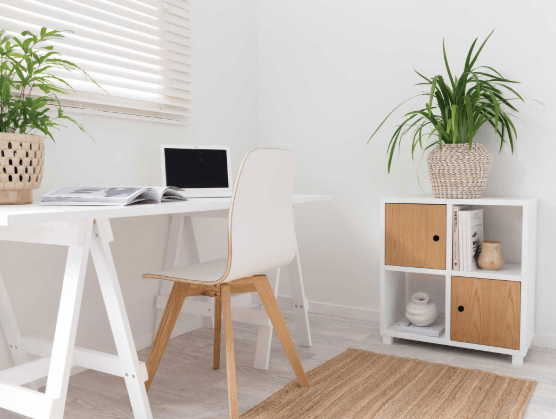
Small spaces demand vertical efficiency and modularity. Use ceiling rails, wall bins, and compact shelves to build height without crowding floors. Design flexible zones that adapt to tasks, so a single area becomes worktable, storage, and filing corner as needed. Under-desk nooks and tight corners offer discreet holds that still feel open. Lightweight, tool-free modules reconfigure with ease, keeping lines clean and priorities accessible, and inviting further exploration of how to fit more in.
Maximize Vertical Storage for Small Rooms
Vertical space often holds the key to functional small offices. The design favors clean lines and purpose over ornament. Compact shelves anchor vertical stacks, ceiling rails support flexible hooks and organizers, and modular cubbies divide tasks without crowding. Wall mounted bins provide quick access, reducing clutter. This approach promotes freedom through accessible, scalable storage that respects limited footprints.
Create Multi-Functional Work Zones
Creating multi-functional work zones involves carving a single area into distinct, interchangeable regions that support varied tasks without expanding the footprint. The setup encourages flexible routines, clear boundaries, and easy transitions. A compact corner or wall-mounted systems sustain focus, while seating and surfaces adapt to short bursts of work or creative sessions. two word discussion idea 1, two word discussion idea 2.
Optimize Under-Desk and Corner Areas
Under-desk and corner areas offer compact storage and workflow gains by using vertical and shallow spaces. The approach favors clean lines, modular components, and accessible placement, reducing clutter without sacrificing openness.
Under desk organizers maximize surface efficiency, while corner shelving creates silent storage hubs. This arrangement supports freedom of movement, intentionality, and a calm workspace, encouraging focused, productive routines.
Pick Lightweight, Modular Solutions for Easy Reconfiguration
Lightweight, modular solutions enable quick reconfiguration without tools or heavy lifting. They empower occupants to adapt work zones as needs shift, preserving floor space and flow. Systems prioritize durability and ease, resisting clutter while inviting experimentation.
Lightweight modular designs promote reallocation with minimal disruption, enhancing reconfiguration flexibility and encouraging a dynamic, organized home office that grows with daily routines and evolving tasks.
Frequently Asked Questions
How Can I Hide Cords Without Losing Accessibility?
A methodical approach hides cords while preserving accessibility: implement cable management with discreet channels, hidden power strips, and labeled paths; use modular furniture that conceals cables yet allows quick access; adopt minimal decor, maintaining functional freedom and organization.
What Budget-Friendly Options Still Look Professional?
Budget friendly options include modular desks, stacking shelves, and cable-organized filing trays, delivering a professional appeal. The solution emphasizes simplicity, adaptability, and durability, offering budget friendly, minimal setups that empower users to rearrange space freely without sacrificing style.
How Do I Measure Small Spaces Accurately?
Measuring small spaces accurately requires calm evaluation: use measuring templates to mark lengths, widths, and heights; record door swing and outlet positions. Focus on space optimization, leaving clear paths; the approach invites freedom through minimalist, functional data.
Which Materials Are Best for Durability in Humidity?
Durability in humidity favors materials like powder-coated steel and aluminum, plus humidity resistant composites. The choice reduces warping and corrosion, offering dependable storage. In measured restraint, the design speaks: resilience, freedom, and a quiet, functional permanence.
See also: Connected Devices: Pros and Cons
Can I Integrate Storage With Existing Decor Themes?
Integrating storage with existing decor themes is feasible; it achieves decor cohesion through modular, neutral pieces. By prioritizing integrating aesthetics, this approach preserves minimalist lines while allowing personal expression, supporting functional freedom and a seamless, adaptable workspace.
Conclusion
In small home offices, vertical strategy drives function. A study notes that vertical storage can reclaim up to 30% of floor space, transforming clutter into efficiency. The approach emphasizes modular, lightweight solutions that reconfigure without tools. By creating multi-functional zones and optimizing under-desk and corner spaces, the area remains adaptable as needs shift. The result is a clean, accessible workflow: compact shelves, ceiling rails, and cubbies that sustain focus while expanding capacity. Minimalism, reimagined through scalable storage.